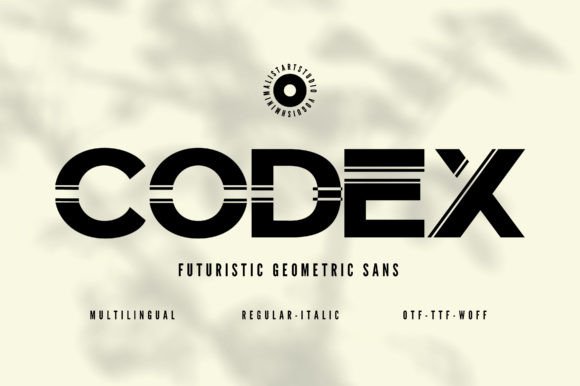
Codex Typeface: A Modern Sans Serif for Branding
When I first opened my design software to tackle a visual refresh for a boutique skincare line, I knew I needed something that felt both grounded and forward-thinking. That is when I stumbled upon Codex, a freebie among the many fonts cluttering my download folder. Introducing Codex, a sleek and modern sans-serif font that combines geometric elements with futuristic design to create a minimalist typeface that exudes sophistication and elegance. With over 604 met, this typeface immediately caught my eye not just for its clean lines, but for the subtle personality hidden within its structure. As an experienced brand designer, I am always skeptical of free assets, but testing Codex in a real-world project revealed a depth that rivals many premium options.
Using Codex for Minimalist Logo Design and Brand Identity
The primary test for any new addition to my library of fonts is how it holds up in logo design. For the skincare project, the client wanted a mark that communicated purity without feeling sterile. I started sketching concepts using Codex as the foundational element. The geometric nature of the letters provided a sturdy skeleton, while the slight futuristic touches prevented it from looking like every other generic sans serif on the market. When I placed the wordmark on a business card mockup, the spacing felt natural, requiring minimal kerning adjustments. This is a rare trait in freebies, where you often fight against awkward gaps or cramped characters. Codex allowed me to build a brand identity that felt expensive and curated, proving that high-end aesthetics do not always require a high-end price tag.
Codex Performance in Packaging Design and Product Labels
Moving from the digital screen to physical applications, I tested Codex on packaging design layouts. The challenge here was readability at smaller sizes, particularly on product labels where space is at a premium. I applied the font to a series of serum bottle labels, using it for both the product name and the descriptive text. The minimalist style of the typeface ensured that the hierarchy remained clear. The futuristic design elements did not distract from the essential information; instead, they added a layer of modern elegance that aligned perfectly with the brand’s positioning. In the world of commercial font usage, versatility is key, and Codex demonstrated that it could handle the dual role of being a display font for headlines and a functional text font for ingredients lists. The result was a cohesive look that stood out on a crowded shelf, offering a sophisticated alternative to the handwritten or script fonts that dominate the organic beauty sector.
Integrating Codex into Web Design and Social Media Graphics
In today’s digital-first landscape, a font must perform equally well on a website header and an Instagram post. I integrated Codex into the homepage hero section of the brand’s new site. The sleek and modern sans-serif font loaded quickly and rendered crisply across different devices, a crucial factor for web design. Its geometric elements provided a strong visual anchor against the soft, pastel photography used in the campaign. For social media graphics, I found that Codex worked exceptionally well for short phrases and quotes. The minimalist typeface exudes sophistication and elegance, which translated beautifully into square-format posts. Whether used as a bold statement or a subtle caption, the font maintained its integrity. This consistency across platforms is vital for building brand recognition, and Codex made it easy to maintain a unified voice without needing to switch between multiple typefaces. It is a testament to how well-curated freebies can support a comprehensive digital strategy.
Pairing Codex with Serif and Script Fonts for Visual Contrast
While Codex is strong enough to stand alone, I also explored how it interacts with other styles in a modern typography system. I experimented with pairing it with a classic serif font to create a juxtaposition of old and new. The geometric stability of Codex balanced the ornate details of the serif, creating a dynamic tension that added interest to editorial design layouts. I also tried combining it with a delicate script font for accent purposes. Here, Codex acted as the grounding force, allowing the handwritten elements to shine without making the overall composition feel chaotic. These experiments highlighted the font’s flexibility. It does not demand to be the only voice in the room; rather, it supports and enhances other design assets. For designers looking to expand their toolkit, understanding these pairing possibilities is essential. Codex serves as an excellent neutral base, much like a well-tailored suit, allowing you to accessorize with more expressive typefaces when needed.
Evaluating Licensing and Practical Use for Commercial Projects
Before finalizing any project, I always review the licensing terms, especially when working with freebies. While Codex is available as a free download, it is crucial to verify whether the license permits commercial use for client work, packaging, and merchandise. In my case, the font allowed for broad application, but I recommend every designer double-check the specific EULA included with the download. Additionally, I examined the technical aspects of the font file. With over 604 met, the character set is robust, supporting various languages and special characters, which is a significant advantage for international brands. I also checked for included styles and alternates. While Codex is primarily a minimalist sans serif, having access to different weights or ligatures can enhance its utility in complex layouts. My advice is to always test the font in your intended medium before committing. Print a sample, view it on mobile, and check it in low-light conditions. This due diligence ensures that the futuristic design elements remain legible and effective, regardless of the context. By treating free fonts with the same rigor as premium purchases, you can uncover hidden gems like Codex that elevate your work without breaking the budget.